
Quick answer: The best pergola designs for Indian homes are built for heat first: a frame sized for the weight of grown climbers, rafters close enough to cast real shade, a material that suits the site (powder-coated steel, treated timber, aluminium or masonry), and climbers such as bougainvillea, jasmine or Rangoon creeper that thrive in Indian summers. Place it where people actually sit at the hottest time of day.
Pergola design is one of the most searched garden topics in India, and most of the pictures behind those searches were taken somewhere cooler. A pergola that looks elegant in a mild climate can be useless in an Indian May if it casts thin shade, gets too hot to sit under, or is too weak to carry the climbers that would have fixed both problems.
These are the pergola design ideas we use on homes, terraces, hotels and estates in Rajasthan and across India, where the sun is the brief.
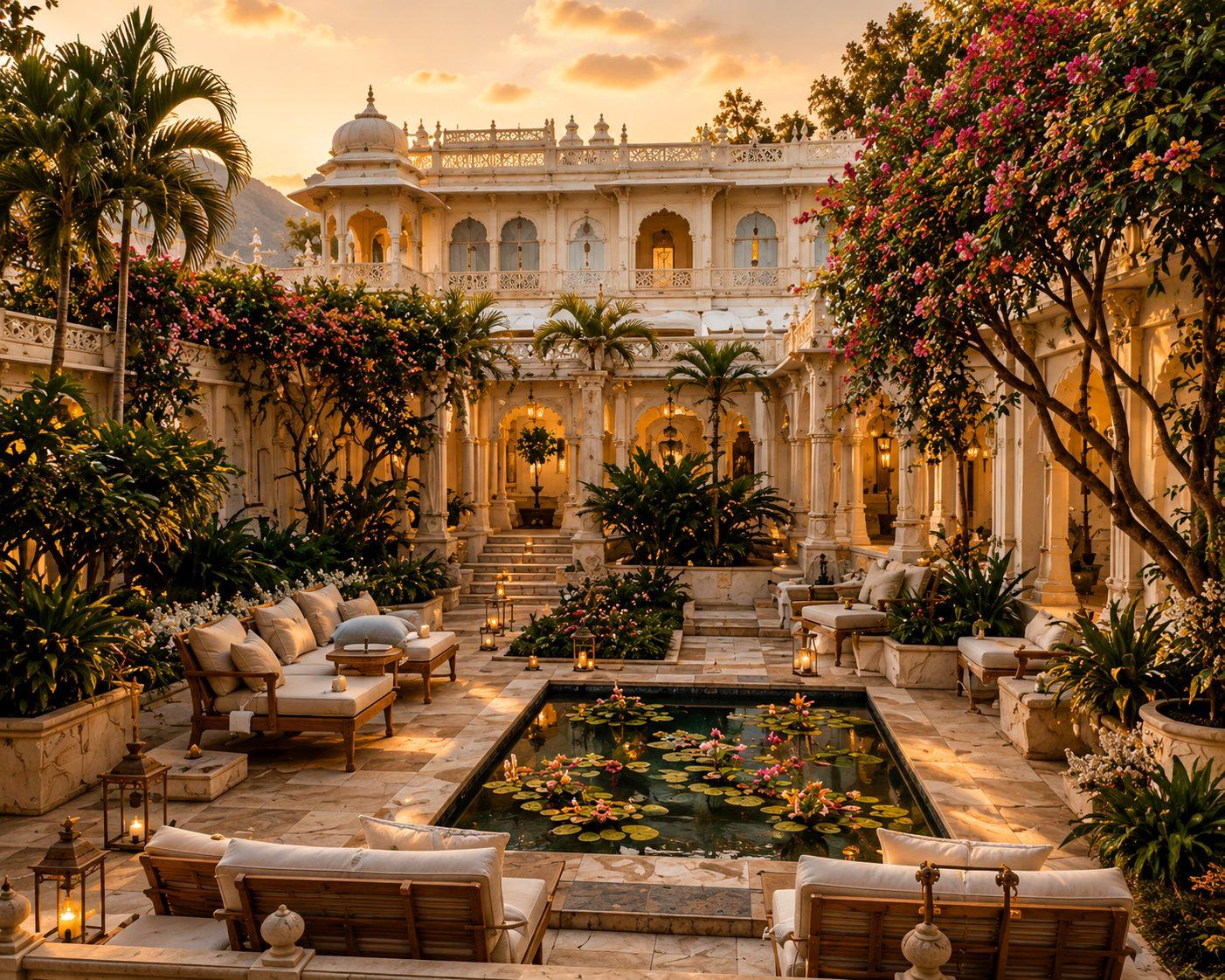
What is a pergola for?
A pergola is an open frame of posts and overhead beams that gives partial shade and supports climbing plants. Unlike a solid roof, it lets air move and light filter through, which keeps the space beneath cooler and more pleasant. In India it does three jobs: shades seating or a walkway, frames a view or entrance, and carries climbers that eventually become the real shade.
Types of pergola
| Type | Where it works | Watch out for |
|---|---|---|
| Attached pergola | Extending shade from the house over a sit-out or verandah | Fixings into the wall and rainwater running back towards the house |
| Freestanding pergola | A shaded room in the garden, by a pool or lawn | Footings and bracing against wind |
| Walkway pergola | Shading a path between two points, entrances, drives | Enough height and width for people to pass comfortably |
| Rooftop pergola | Shading terrace seating | Load, wind and fixing without breaking the waterproofing |
| Louvred pergola | Adjustable shade and rain cover for outdoor dining | Higher cost and mechanical upkeep; no climbers |
Pergola materials compared
The right material depends on budget, maintenance and setting. For most Indian homes, powder-coated steel is the practical choice; treated hardwood looks warmest; masonry or stone suits heritage properties.
| Material | Strengths | Trade-offs |
|---|---|---|
| Powder-coated steel (MS/GI) | Strong, slim sections, handles heavy climbers | Needs good coating and drainage to avoid rust; gets hot in direct sun until climbers cover it |
| Aluminium | Light, rust-free, low maintenance | Costs more than steel; less suited to very heavy climbers without good design |
| Treated hardwood | Warm, natural look; cooler to the touch | Needs regular oiling or sealing; termite and weather protection |
| Bamboo | Low cost, light, natural | Shorter life outdoors; best for seasonal or informal shade |
| Masonry or stone columns | Permanent, suits heritage and palace architecture | Heavy; needs proper foundations; often combined with steel or timber beams |
How to design a pergola for real shade
Shade comes from three things: the orientation of the rafters, how closely they are spaced, and the climbers that grow over them. Rafters running east–west cast more shade through the middle of the day; closer spacing gives more shade before climbers fill in.
- Start from where people sit, and when. Morning tea and evening drinks need shade from different directions.
- Size the frame for mature climbers. A fully grown bougainvillea is heavy and catches wind; posts, beams and fixings must carry it.
- Choose rafter spacing deliberately. Closer for shade on day one, wider if you will wait for climbers.
- Add a layer while plants grow. A shade net or bamboo screen on top can be removed once climbers cover the frame.
- Plan the planting pits at the base of posts, with good soil and a drip line, before any paving is laid.
Best climbers for a pergola in Indian heat
| Climber | Why use it | Care |
|---|---|---|
| Bougainvillea | Reliable colour in strong sun and heat | Thorny; flowers best when kept lean; train and tie in regularly |
| Jasmine (Jasminum) | Evening scent over seating | Moderate growth; regular watering in summer |
| Rangoon creeper | Scented flowers that change colour; vigorous cover | Prune to keep in bounds |
| Curtain creeper | Very fast screening and shade | Hangs in curtains; trim to keep head height clear |
| Grape vine | Deciduous shade in summer, sun in winter, plus fruit | Suits drier regions; needs annual pruning |
Avoid climbers that need a cold winter to perform, such as wisteria, in most of India.
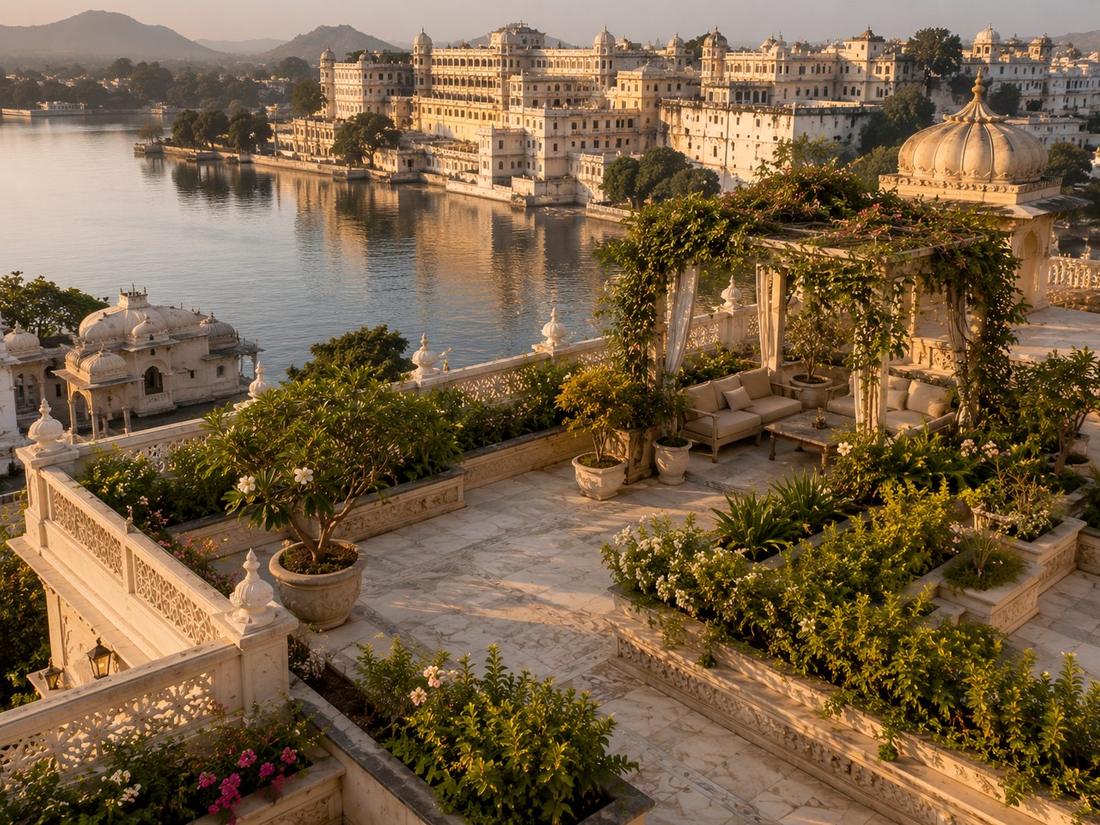
Pergola design ideas by space
- Small terrace: one corner pergola over two chairs, with a single climber trained over it. Keeps the rest of the terrace open.
- Home garden: a freestanding pergola as an outdoor dining room, with jasmine for the evenings.
- Driveway or entrance: a walkway pergola that frames the approach and shades the path.
- Poolside: a pergola for daytime shade beside the pool, with planting that does not drop leaves into the water.
- Hotel or resort: a series of linked pergolas that create shaded routes and gathering spaces for guests.
- Heritage property: stone or masonry columns with timber or steel beams that respect the architecture.
Pergolas on terraces and rooftops
A rooftop pergola needs three extra checks: whether the roof can take the point loads of the posts, how the frame resists wind at height, and how it is fixed without damaging the waterproofing. Weighted bases or fixings into parapets and beams are common answers, decided with an engineer. Our terrace garden guide covers the roof checks in more detail.
Pergola maintenance
- Climbers: tie in new growth and prune twice a year to keep shape and head height.
- Steel: inspect the coating yearly and touch up any rust spots early.
- Timber: re-oil or reseal as recommended for the finish, usually every one to two years.
- Fixings: check bolts and brackets before the monsoon winds.
- Watering: a drip line to each planting pit keeps climbers growing through summer.
What decides the cost of a pergola?
The main factors are size, material, foundations or roof fixings, finish quality, any roofing or louvres, and whether planting pits and irrigation are built in at the same time. Doing structure and planting together costs less than adding planting later and gives a better result.
Planning a pergola? We design, build and plant pergolas and shade structures for homes, terraces, hotels and estates in Udaipur and across India. See our pergola and shade service.
Tell us about the spaceAsked often.
Which material is best for a pergola in India?
Powder-coated steel is the most practical for most homes because it is strong and handles heavy climbers. Aluminium is lighter and rust-free, treated hardwood looks warmest but needs regular sealing, and masonry or stone columns suit heritage settings.
Which climbers are best for a pergola in hot weather?
Bougainvillea, jasmine, Rangoon creeper and curtain creeper all handle Indian heat. Grape vine works in drier regions and gives shade in summer and sun in winter.
How do I get more shade from a pergola?
Run the rafters east to west, space them more closely, add a removable shade net while climbers grow, and plant vigorous climbers with drip irrigation at each post.
Can I build a pergola on a terrace?
Yes, after checking that the roof can take the post loads, designing the frame for wind at height, and fixing it without damaging the waterproofing, usually with weighted bases or fixings into beams and parapets.
How long do climbers take to cover a pergola?
Usually about two growing seasons for generous cover, with regular tying in and pruning.
Tell us about the site.
Every scheme begins with a survey. Send us the essentials and we will arrange one, then return a drawn plan — not a quotation against an assumption.
OR REACH US DIRECTLY