
Quick answer: A terrace garden is a garden built on a roof or terrace, in containers or raised beds, on top of proper waterproofing and drainage. To start one in India: check the roof can carry the weight, upgrade the waterproofing, plan drainage, lay drip irrigation, fill beds with a light growing mix, then plant heat-tolerant species after the monsoon or in February.
Terrace gardening has become one of the most searched garden topics in India, and for good reason. In most cities the roof is the only open ground a home has. Done properly, it becomes the coolest, greenest room in the house. Done carelessly, it becomes a leak in the ceiling below and a row of dead pots by the second summer.
This guide brings together what we have learned designing and building terrace gardens for homes, hotels and estates since 2015, mostly in Rajasthan's dry heat, which is about as demanding as Indian conditions get. Each section links to a more detailed guide where one exists.

What is a terrace garden?
A terrace garden is any garden built on a flat roof, terrace or large balcony, where plants grow in containers, raised beds or a continuous planted layer instead of natural ground. Because it sits on a building, it needs things a ground-level garden does not: a roof strong enough to carry wet soil, waterproofing that will survive constant moisture, and a way for water to drain away.
The terms are used loosely. A terrace garden usually means a garden on a terrace attached to a flat or apartment. A rooftop garden or roof terrace garden usually means the whole top roof of a building. The principles are the same; the scale and the structural checks differ.
Why build a terrace garden?
- A cooler home. Planting and shade on the roof reduce the heat that the slab absorbs and passes to the rooms below.
- Usable outdoor space. In dense cities, the roof is often the only private open space available.
- Food and herbs. A few raised beds can supply greens, herbs and seasonal vegetables for much of the year.
- Wildlife. Flowering plants bring bees, butterflies and birds into neighbourhoods with little green cover.
- Value and enjoyment. A well-made terrace becomes the room people use every evening.
Can your roof take a terrace garden?
Most roofs can take some planting, but not every roof can take every kind of garden. Wet growing medium, water features and people standing together add up to far more weight than an empty roof was designed for. Before anything is carried up, have the structure assessed or find the building's structural drawings, and place heavy elements over beams and load-bearing walls.
| Check | Why it matters | What to do |
|---|---|---|
| Load | Wet soil is heavy, and deep beds and trees concentrate that weight | Get the roof assessed; keep heavy planters over beams; use a light growing mix |
| Waterproofing | Roofs are built to shed rain, not to sit under damp soil | Upgrade the membrane and add a root barrier before planting |
| Drainage | Standing water rots roots and finds every weak joint | Drainage layer, filter fabric, falls to working outlets that stay reachable |
| Water supply | Containers on a roof dry out quickly in summer | Bring a tap or line up to the terrace and plan drip irrigation |
Our guide to roof terrace gardens goes deeper on loading and waterproofing.
How to start a terrace garden, step by step
The order below is structural, not a preference. Most terrace garden failures come from doing these steps out of order, usually planting first.
- Decide what the terrace is for. Pick two uses: morning tea and herbs, evening seating and scent, or food growing. Everything else follows.
- Check the load. Know what the roof can carry before deciding where beds and seating go.
- Fix the waterproofing. Assess the existing membrane, upgrade it where needed and add a root barrier.
- Plan the drainage. A drainage layer and filter fabric under the beds, and outlets that can be cleaned.
- Lay the irrigation. Drip lines go in before the growing mix, zoned by how thirsty the plants are.
- Fill with a light growing mix. Compost, coco peat and coarse drainage material.
- Plant last, in a good season, with species chosen for heat, wind and your water.
The full sequence, with what goes wrong at each stage, is in our terrace garden setup guide.
Terrace garden design and layout
Good terrace garden design keeps the floor open and puts the planting where it does the most work: along parapets, in corners and overhead. Shade comes first in the design, because in most of India an unshaded terrace is unusable for much of the day from March to October.
- Planting along the edges leaves the middle free for seating and movement.
- Shade over the seating from a climber on a frame, a pergola or a seasonal shade sail.
- A surfaced floor under the seating area: deck tiles, stone or an outdoor rug instead of bare concrete.
- One focal point, such as a specimen plumeria or a trained climber, rather than several competing features.
- Lighting along the parapet so the terrace is used after sunset, when it is coolest.
For layouts and ideas, see terrace garden ideas that survive a 45°C summer and, for compact spaces, small terrace garden ideas.
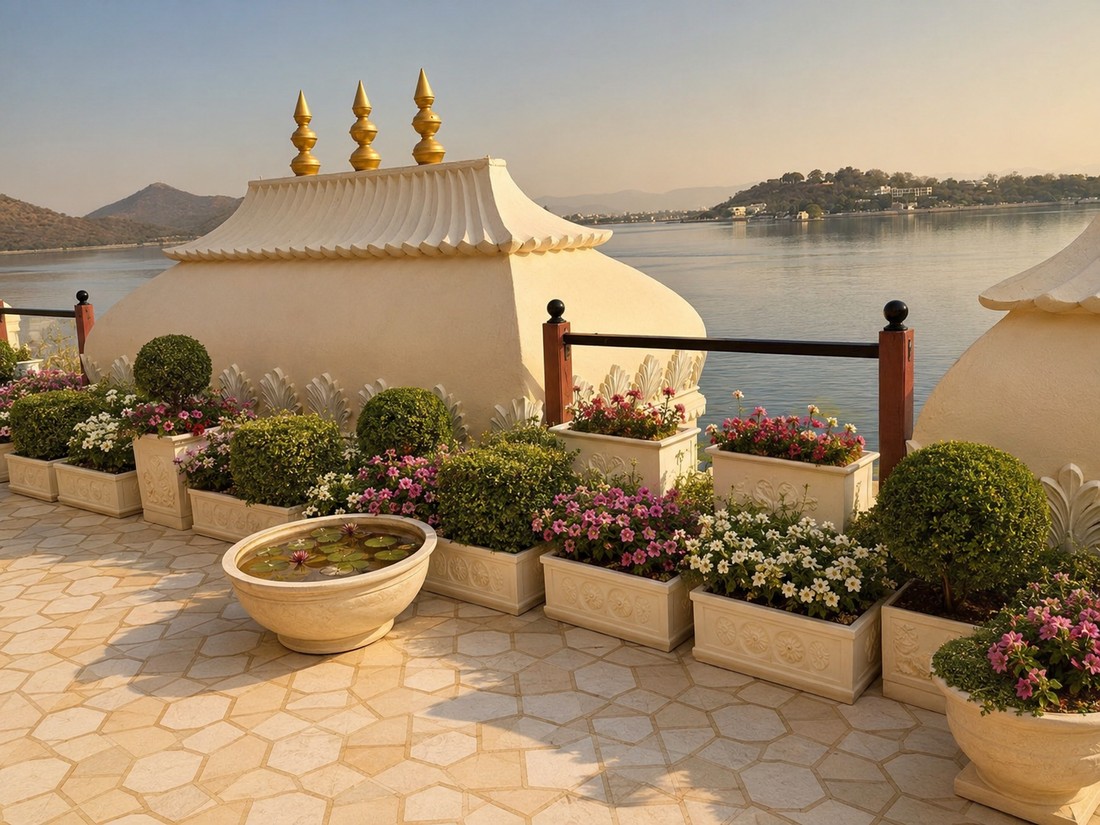
What to grow in a terrace garden
Choose plants for the conditions on your roof, not for how they look in the nursery. On most Indian terraces that means strong sun, wind, reflected heat and often hard water. Sun-loving, drought-tolerant plants form the structure; herbs and vegetables fill raised beds in the cooler months.
| Type | Reliable choices | Notes |
|---|---|---|
| Shrubs and small trees | Plumeria, karonda, Tecoma stans, oleander, hibiscus | Give them deep containers; plumeria forgives a missed watering |
| Flowering colour | Bougainvillea, Ixora, periwinkle, portulaca | Bougainvillea flowers best when it is not overwatered or overfed |
| Climbers | Curtain creeper, Rangoon creeper, jasmine, bougainvillea | Use them for shade; they lower water demand for everything below |
| Herbs | Curry leaf, lemongrass, tulsi, mint, rosemary | Mint prefers part shade and steady moisture |
| Winter vegetables | Spinach, methi, coriander, radish, tomato, chilli | Sow from October; stagger sowings for a steady supply |
| Monsoon vegetables | Bottle gourd, ridge gourd, beans, okra | Fast growing; give climbers a frame |
Avoid plants that need to stay moist all the time, such as ferns and hydrangeas, unless the spot is shaded, and keep vigorous figs away from waterproofing. Our list of plants that survive a terrace in Rajasthan goes species by species.
Containers and growing mix
Use fewer, larger, deeper containers and a light growing mix. Small pots dry out between morning and afternoon in summer, and heavy garden soil compacts and adds weight on a roof. Light-coloured, thick-walled containers keep roots cooler than dark or thin ones.
| What you are growing | Depth of growing mix |
|---|---|
| Herbs, leafy greens, groundcover | About 150 mm |
| Shrubs, tomatoes, chillies | 200 mm or more |
| Small trees and large shrubs | As deep as the structure allows, placed over beams |
A good general mix combines compost for nutrition, coco peat to hold moisture, and coarse material such as perlite or fine gravel for drainage. Top every container with mulch to keep the surface cool.
How to water a terrace garden
Drip irrigation on a timer is the most reliable way to water a terrace garden. It puts water at the roots early in the morning, loses little to evaporation, and keeps going when nobody remembers. Hand-watering works in the first season and usually fails in the second.
- Zone by thirst so shrubs, herbs and new planting get different amounts.
- Filter the water, especially hard bore water, and flush the lines each season.
- Change the schedule with the season: more in summer, little or none in the monsoon, less in winter.
- Flush containers monthly in summer with a heavy soak to wash out salts.
See our drip irrigation page for how we design systems for terraces.
A terrace garden year in India
India's climate varies widely, so treat this as a guide for the hot, dry north and west, and adjust for humid or hill regions.
| Months | What to do |
|---|---|
| September–November | Main planting season. Plant shrubs and climbers; sow winter vegetables and flowers; feed the soil. |
| December–January | Harvest winter crops; light pruning; reduce watering; protect tender plants from cold nights in the north. |
| February–March | Second planting window. Structural pruning, top up mulch, test the irrigation before the heat. |
| April–June | Survival season. Water early, keep mulch thick, shade new plants, prune very little. |
| July–August | Monsoon. Clear drains and outlets, switch irrigation down, watch for fungal problems, grow gourds and beans. |
Terrace garden maintenance
A terrace garden needs a little attention every week and a bigger check each season. Weekly: water check, deadheading, picking. Monthly: feeding, pest check, flushing containers in summer. Each season: pruning, topping up mulch, cleaning irrigation filters and clearing roof outlets before the monsoon. For larger terraces, a garden maintenance contract keeps this on a schedule.
What decides the cost of a terrace garden?
Terrace garden costs vary widely, so it is more useful to know what moves the number than to rely on a per-square-foot figure. The biggest factors are:
- Waterproofing work needed before planting, which can be the largest single item.
- Size and depth of beds, and whether they are built in or freestanding.
- Shade structures such as pergolas or frames.
- Irrigation and how many zones it needs.
- Plant sizes: young plants cost far less than mature specimens.
- Flooring, lighting and seating.
- Ongoing maintenance, which matters as much as the build.
Common terrace garden mistakes
- Planting before waterproofing. The leak shows up months later, when fixing it means moving the garden.
- Skipping the load check. Heavy beds and trees placed anywhere on the slab.
- Too many small pots. They dry out fast and need watering several times a day in summer.
- No shade. The terrace is unused for most of the year.
- A lawn on the roof. The highest water demand of anything you can plant.
- Starting in May. Plants put in just before the heat rarely establish.
Our terrace garden guides
- Setting up a terrace garden: the order the work has to happen in
- Terrace garden ideas for Indian homes that survive a 45°C summer
- Plants that actually survive a terrace in Rajasthan
- Small terrace gardens: what works when you have four metres
- Roof terrace gardens: load, waterproofing and the order of operations
Planning a terrace garden? We design, build and maintain terrace and rooftop gardens for homes, hotels and estates in Udaipur and across India, starting with the roof, the sun and the water. See our terrace garden service.
Tell us about the terraceAsked often.
What is a terrace garden?
A terrace garden is a garden built on a flat roof, terrace or large balcony, where plants grow in containers, raised beds or a planted layer on top of waterproofing and drainage instead of natural ground.
How do I start a terrace garden at home?
Decide what the terrace is for, check the roof can carry the weight, upgrade the waterproofing, plan drainage, lay drip irrigation, fill beds with a light growing mix, and plant heat-tolerant species after the monsoon or in February.
Which plants are best for a terrace garden in India?
Plumeria, karonda, Tecoma stans, hibiscus and bougainvillea for structure and colour; jasmine, Rangoon creeper and curtain creeper for shade; curry leaf, lemongrass, tulsi and mint as herbs; spinach, methi, coriander, tomato and chilli in winter.
What soil is used for a terrace garden?
A light growing mix of compost, coco peat and coarse drainage material such as perlite or fine gravel. Plain garden soil is heavy and compacts on a roof.
Is a terrace garden safe for my roof?
Yes, if the roof's load capacity is checked, the waterproofing is upgraded with a root barrier, and water can drain freely. Most leaks come from planting before these steps.
When should I start a terrace garden in India?
The best time is September to November, after the monsoon, or February before the heat. Avoid starting in May.
Tell us about the site.
Every scheme begins with a survey. Send us the essentials and we will arrange one, then return a drawn plan — not a quotation against an assumption.
OR REACH US DIRECTLY