Soft Landscaping
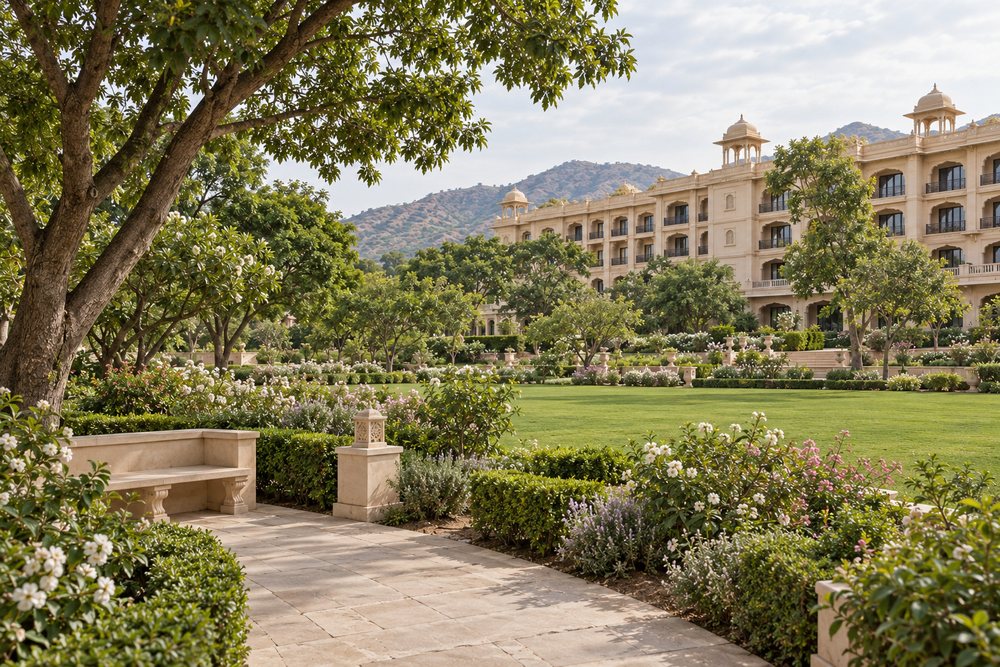
We assess your ground and compose planting in layers — canopy, shrub, groundcover — chosen for India's light and soil.
View service →
Layered plantingWe shape the soft landscapes of India's palaces, resorts and heritage hotels — from measured drawing to living garden.
We shape the soft landscapes of India — from measured drawing to living garden, and every season after.
Nature's Touch is a soft-landscape studio in Udaipur. We work for palaces, heritage hotels, resorts, farmhouses and private homes across Rajasthan and India. We do not build walls, pools or paving. We do everything that is alive: lawns, trees, hedges, flower beds, terrace gardens, kitchen gardens, the irrigation that keeps them watered, and the year-round care that keeps them looking as they did on opening day.
Owners and managers of heritage hotels, palaces and resorts who need the grounds to look right every day of the year. Developers of farmhouses and villas who want the garden designed with the building, not added after. Families who want a terrace or a kitchen garden that actually gets used.
A site visit and a soil check. A drawn master plan with a full planting list and a cost. Planting and irrigation carried out by our own crew, in the right season. Then a maintenance contract, so the garden is cared for by the people who know it.
See all six services →We walk the property with you, test the soil, and note where the sun, the shade and the water are.
Week 1A drawn plan of the whole garden, a list of every plant, the irrigation layout and a budget. You approve it before anything is dug.
Weeks 2–4Levels set, soil improved with compost, and the irrigation pipes laid before the plants go in.
Weeks 4–8Trees, hedges, lawns and beds planted in the season that suits them, by our own crew.
Season-ledMonthly maintenance. The garden fills out over the years under the hands that planted it.
Ongoing
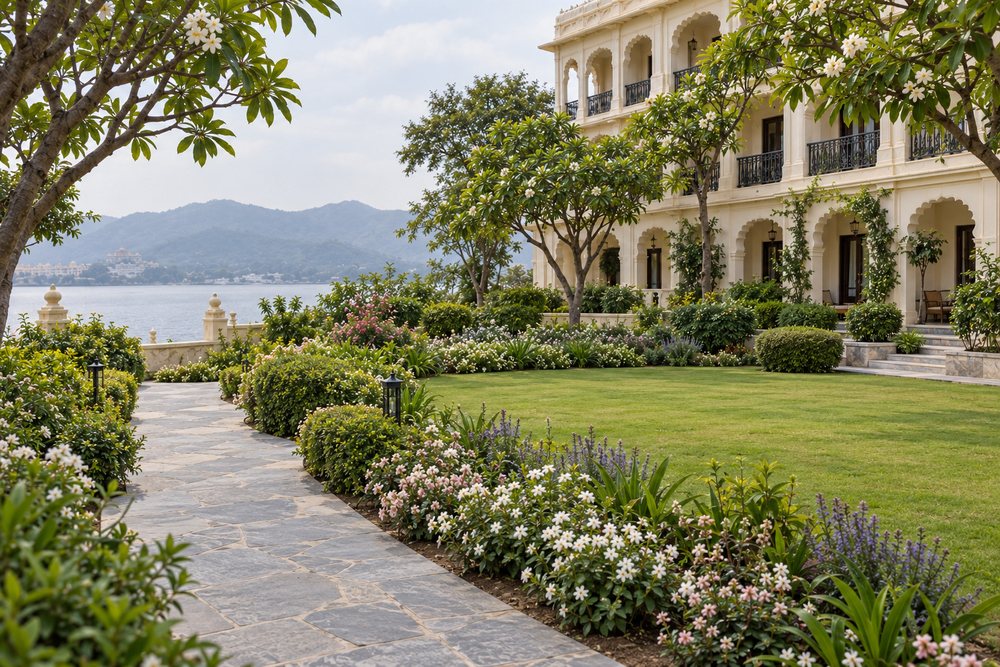
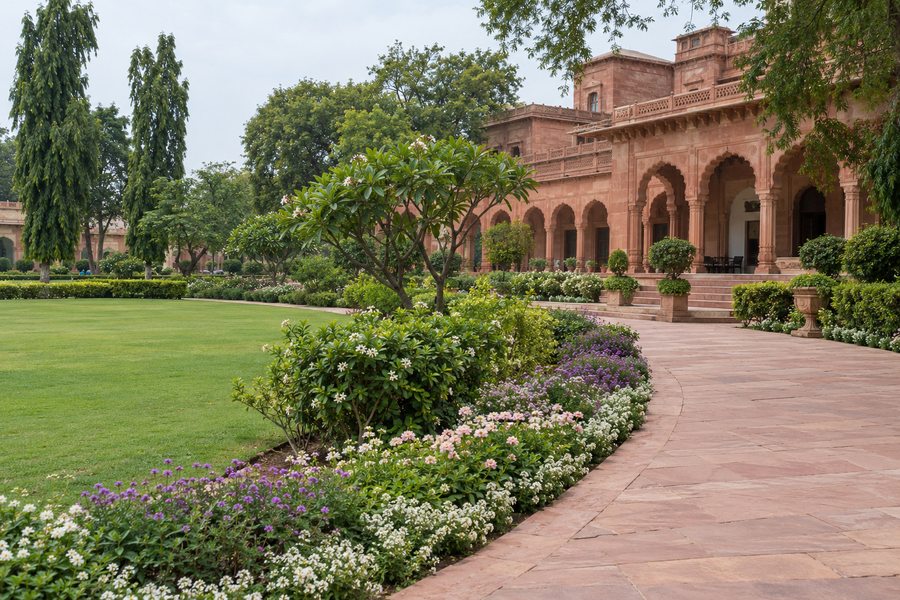
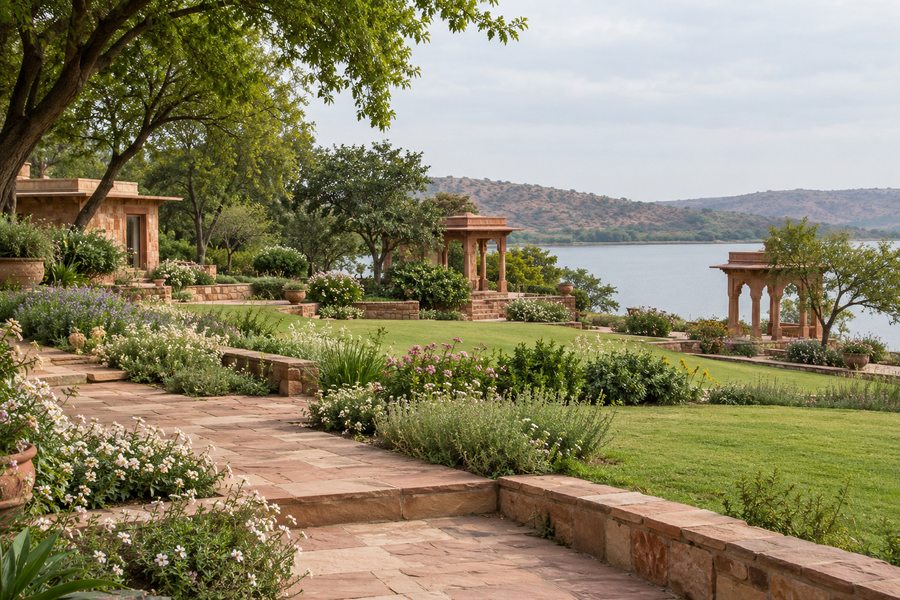
It is composition. Every axis set, every canopy chosen, every water line placed is a decision that shapes how a garden ages.

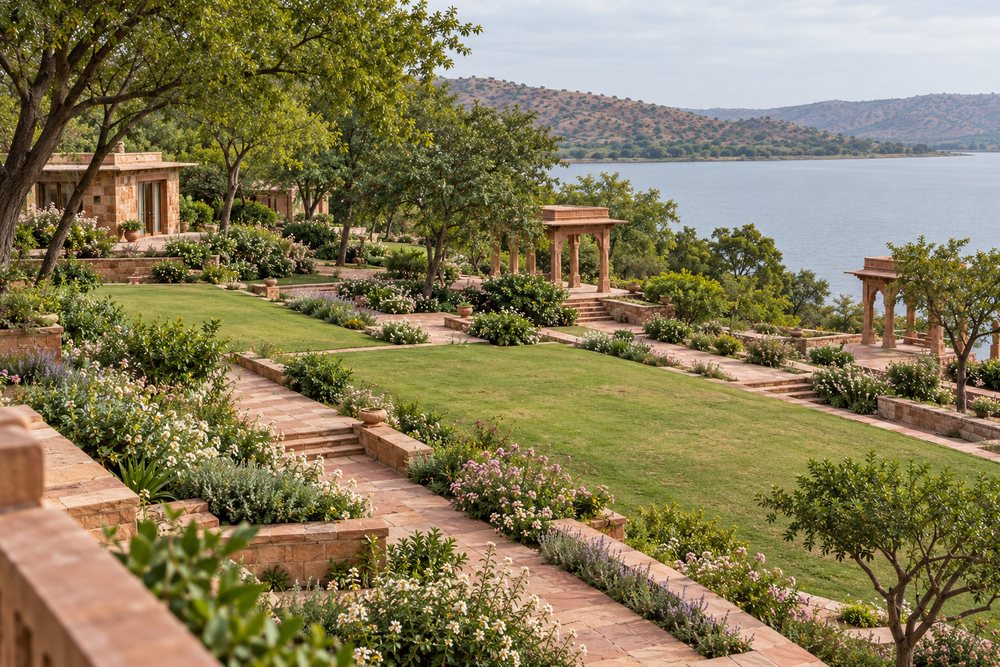
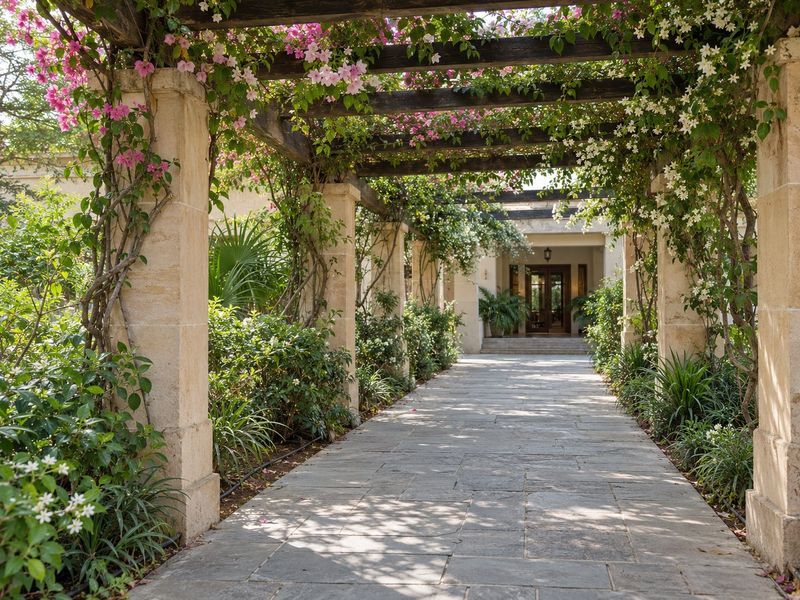
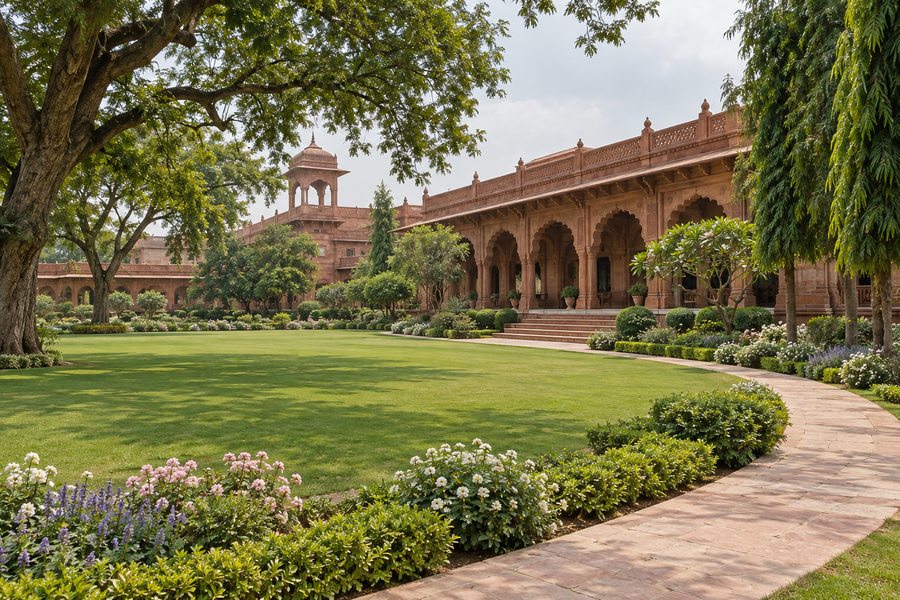
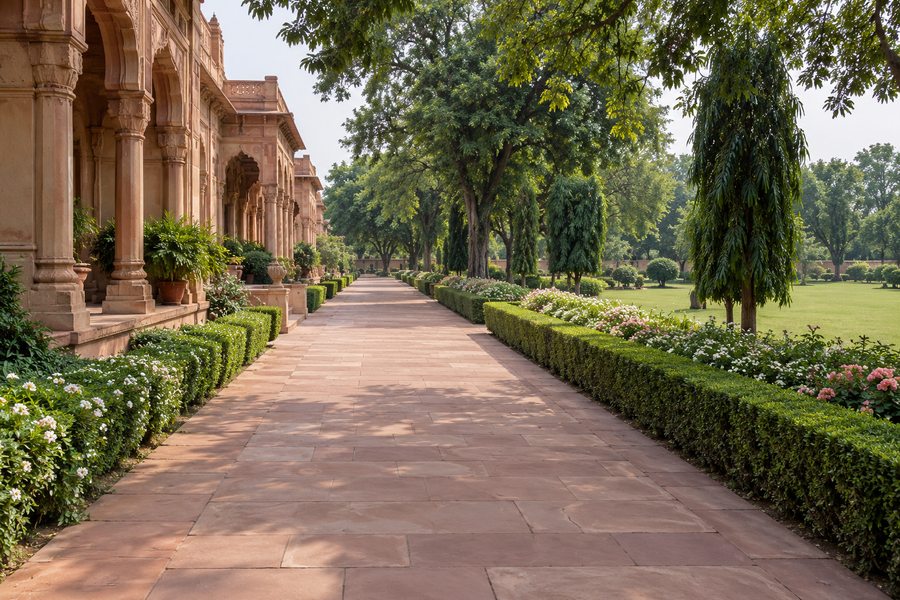
Shade grown, not built. The structure disappears as the planting takes it, and the walk becomes the arrival.

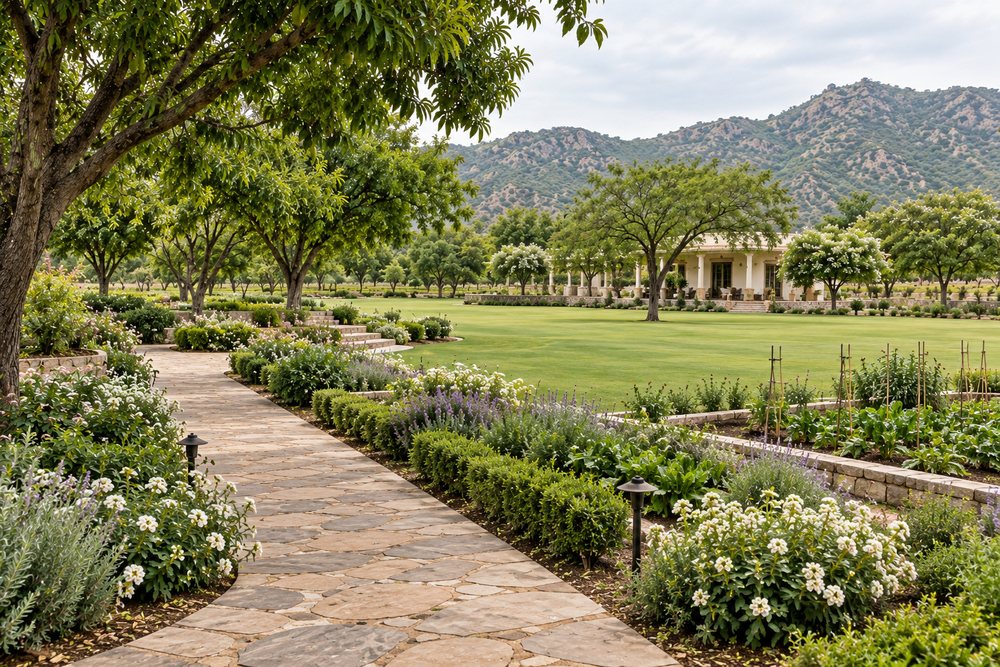
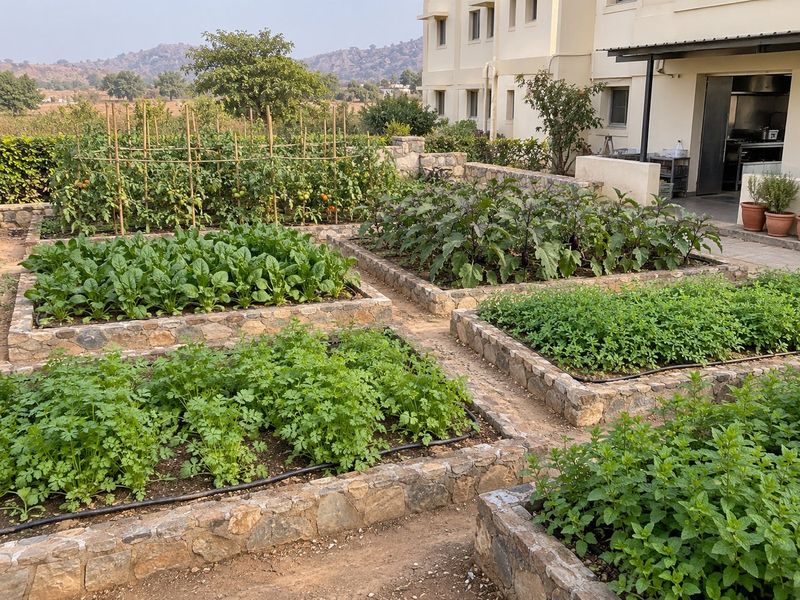
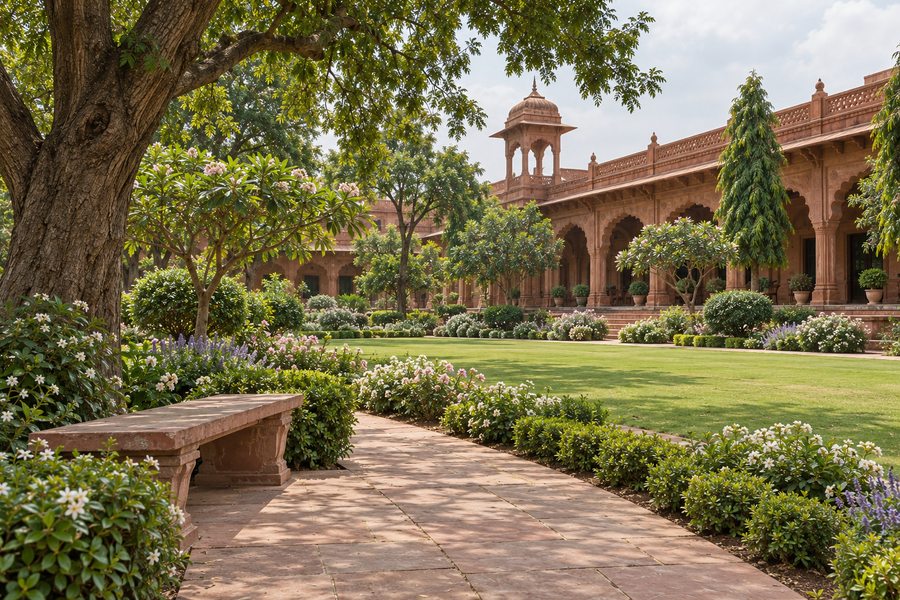
Ornamental where it is seen, productive where it counts — clipped beds built to the chef's brief.

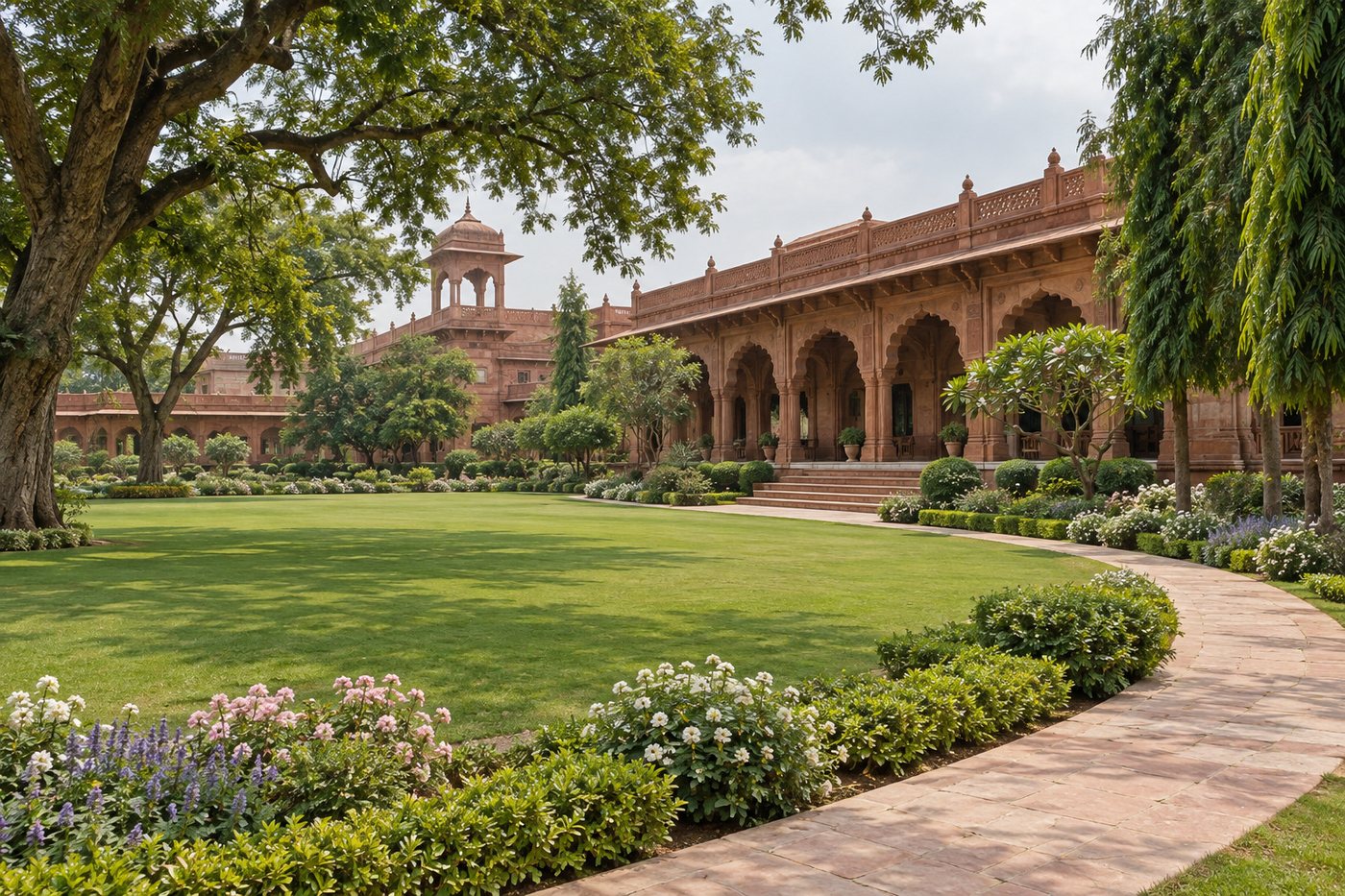
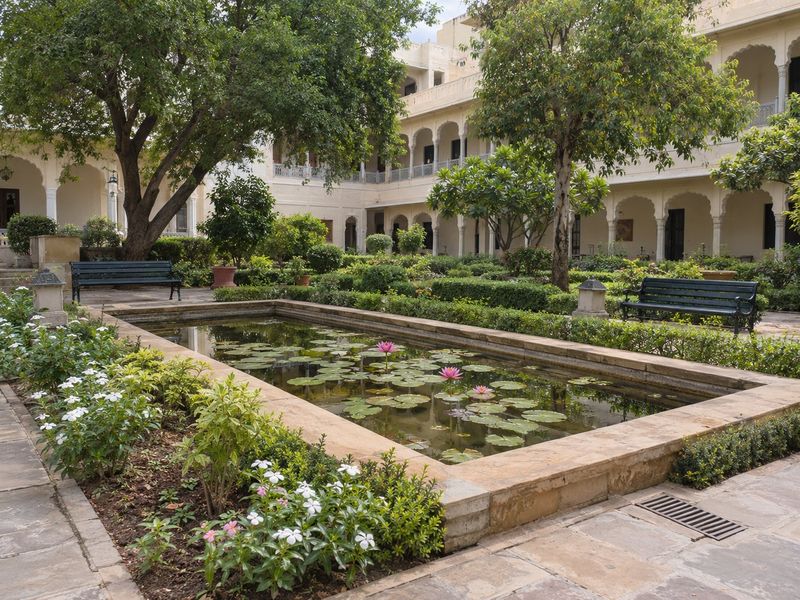
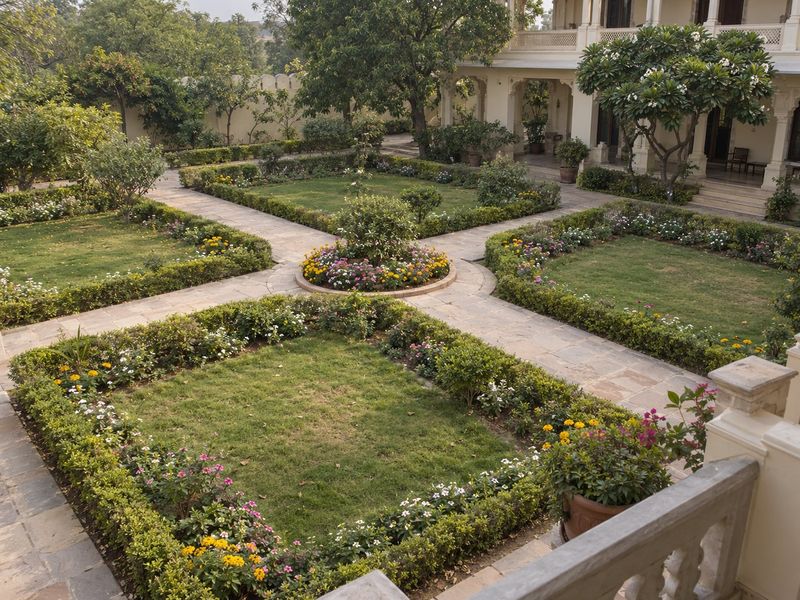
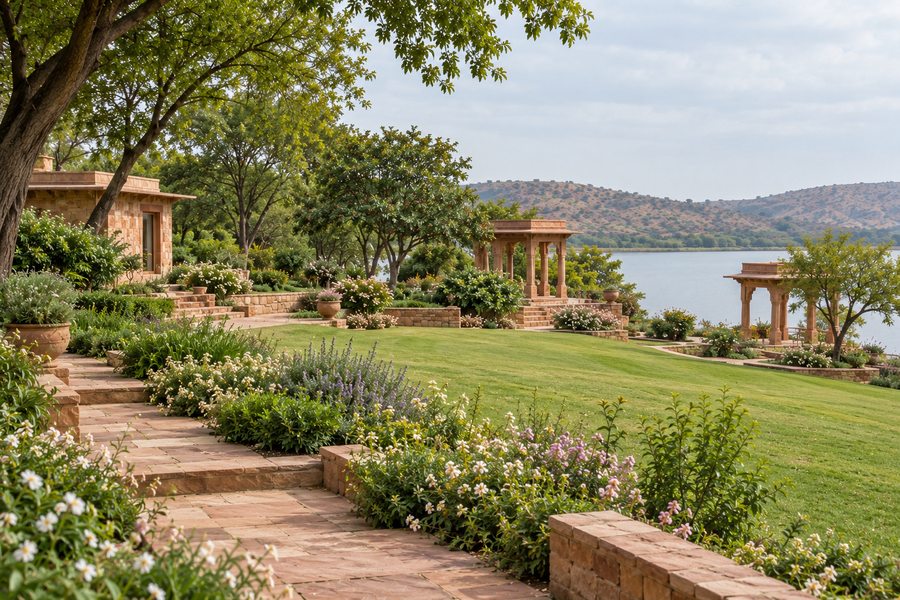
Geometry holds the scheme; planting softens it. The older it gets, the more it looks inevitable.
of industry experience stand behind the studio. Ms. Singh leads a team whose specialists have delivered the gardens of five-star hotels across India — that depth is in every scheme we draw.
"We do one thing — soft landscape — and we do every part of it in-house, from the drawing to the pruning."
Nature's Touch was founded in Udaipur in 2015 with a narrow brief: to bring the rigour of a design practice to planting. Not hardscape, not construction — the living half of a landscape, held to the same standard as the architecture it sits beside.
The studio is led by a senior horticulturist and works only on soft landscape: composition, specimen selection, irrigation and the long stewardship that follows. Every scheme is drawn before it is dug, and maintained by the crew that planted it.
Before we draw, we read. A working board of historic and contemporary schemes — the geometry, the edges, the way light is used. Hover to see each in colour.


Reference imagery only. These are precedent studies of historic and contemporary gardens by others — not works by Nature's Touch. Our own built projects appear in Realisation.
Every garden we make starts on paper: a plan of the ground and an elevation of the building beside it, on one sheet. Below is one scheme, a water garden for a palace on Lake Pichola, from the first sketch to the planted garden. Hover the numbers to read the plan, and drag the handle further down to compare drawing and garden.
We draw by hand first, and we draw the garden and the building together. That is how the two end up belonging to each other instead of one being added to the other afterwards.
Here the garden is laid out along a long reflecting pool, with a row of cypress trees holding the main line of sight from the palace. The terraces step down towards the water so the building and the garden read as one. Rain from the roofs is collected and returned to the pool. Hover a number to see what each part is.


The drawing on this page is the start, not the whole job. From it we produce a set of working drawings that the crew builds from, and that you keep. Every plant on the site has a place on paper before it has a place in the ground.
Because the irrigation is drawn at the same time as the planting, the pipes go in first and the plants go in over them. Nothing is dug up twice. And because the crew that plants the garden is the crew that maintains it, the drawings stay in use for years after the garden opens.
Hover any zone on the plan — or a line of the legend — to see that part of the scheme. Click the image to open it full size.
Four planted quadrants in the classical Rajput layout, divided by water. Seasonal colour is rotated bed by bed so the scheme never reads bare.
One tree, drawn the way it grows: six metres of crown above the ground and roughly the same reach of root below it. A garden is planted small and grows into the drawing over years. That is why we plan for the size a tree will become, not the size it arrives.
Pits dug wide rather than deep. Compost mixed into the soil. Each tree staked, mulched and fitted with its own drip line. Watered daily through the first summer.
What we do · plant & protectLittle happens above ground; a great deal below. Roots push out into the surrounding soil. We check weekly, feed, and do the first light pruning.
What we do · feed & watchThe canopy begins to cast real shade. Hedges close up, lawns knit together. Drip lines are moved outward as the roots spread.
What we do · shape & adjustThe garden now looks like the drawing. Pruning shapes rather than trains. Watering can drop, because the roots reach deeper on their own.
What we do · maintainThe trees carry the garden. Beneath them the planting is renewed in cycles, and the soil is richer than the day we started.
What we do · renewA garden is only as good as the ground it stands in. This drawing is a cut through a planted lawn, two metres deep, showing what a tree needs from the soil and what lives in it. We read every site this way before we plant, because most garden failures start below the surface, not above it.
Earthworms tunnel through the topsoil and let air and water in. Fungal threads (the fine lines in the drawing) link up with tree roots and fetch water and minerals the roots cannot reach on their own; we call these helper fungi. Soil bacteria break down the leaf litter into food for plants. None of this survives chemical fertiliser used carelessly, which is why we feed the soil with compost and mulch instead.
Before drawing a planting plan we dig a pit on site and read these layers. That tells us how deep the topsoil is, whether the subsoil is compacted, where the water sits, and which trees will be happy there. The drip pipe in the drawing sits fifteen centimetres down so water reaches the roots and not the air, and the canopy above shades the ground so less of it evaporates. Every scheme we plant is designed from a hole in the ground first.
This is not decoration. It is the reason our gardens are still healthy in their tenth summer: the soil was understood before the first plant went in, and it has been fed, mulched and watered properly ever since.
Four rules we work by on every site. We build up the soil instead of replacing it. We feed it with compost, not chemicals. We use as little water as the climate allows and lose as little of it as possible. And we choose plants that bring birds and butterflies back, so the garden is alive on the day it opens and richer every year after.
A handful of healthy garden soil holds billions of living things: bacteria, fungi, tiny worms and the earthworms you can see. Together they feed the plants, hold the soil in crumbs that keep water, and keep disease down. Look after them and the garden largely looks after itself.
Before we choose a single plant we dig a pit and read the soil in layers: the leaf litter on top, the dark topsoil, the pale washed-out band, the firmer subsoil, then broken rock and finally bedrock. How thick each layer is tells us how deep roots can go, where water sits, and which trees will do well.
Udaipur's ground runs shallow and stony, with bedrock close beneath. We plant to the profile we find, not the one we wish for — which is why the gardens hold.
Tiny soil life turns dead leaves and roots into food that plants can actually take up.
It glues soil into small crumbs, and the gaps between them hold the air and water roots need.
A soil full of healthy life leaves little room for the pests and diseases that attack weak plants.

We dig and turn the soil as little as possible, so the fungal network and the crumb structure that holds water are not broken.

Bare earth is kept covered — living groundcover or a 50–75 mm mulch — feeding the soil and holding moisture through the heat.

We feed the ground with organic compost rather than heavy synthetic fertiliser, keeping the microbial life diverse and fed.

Beneficial insects and microbes do the pest control. We reach for chemistry last, not first — never as routine.

Plants are grouped by how much water they need: tough, drought-happy planting across the wider grounds, and the thirstier beds kept small and close to the building.

Drip pipes deliver water straight to the roots, underground, so almost none of it is lost to the Udaipur sun.

Roof and hardscape run-off is caught and returned to the garden rather than sent to the drain.

A mulch blanket traps soil moisture; irrigation runs at first light, before the day can steal it.

Plants that belong to this climate thrive on natural rainfall and ask little once established.

Open-grid paving, gravel and stone let rain soak back into the earth instead of running off.

Raised beds and borders built from salvaged wood where the brief allows.

High-thirst turf swapped for groundcover, meadow and planting that works with the microclimate.
We compose a mix of open landing pads for butterflies and long-lasting seed heads for foraging birds. A sample of the palette we plant for wildlife value:
Legend High Medium Low · Palette adapts to each site's aspect, soil and water.
Rendered from the master plan before a spade touches soil, so a client sees the finished garden first. Design intent, not photography.
Smart, science-led work that makes your landscape thrive today — and holds it at opening-day standard for years.
All six services →We assess your ground and compose planting in layers — canopy, shrub, groundcover — chosen for India's light and soil.
View service →
Layered plantingUnused terraces become usable garden floors — waterproofed, planted in lightweight media, engineered for load then designed for the view.
View service →
Green floors overheadDrip lines, emitters and zoned controllers deliver each plant exactly what it needs — the essential discipline in a desert climate.
View service →
Water, to the dropOrnamental English potagers that supply the resort kitchen and delight the eye — clipped parterre beds, built to the chef's brief, kept organic.
View service →
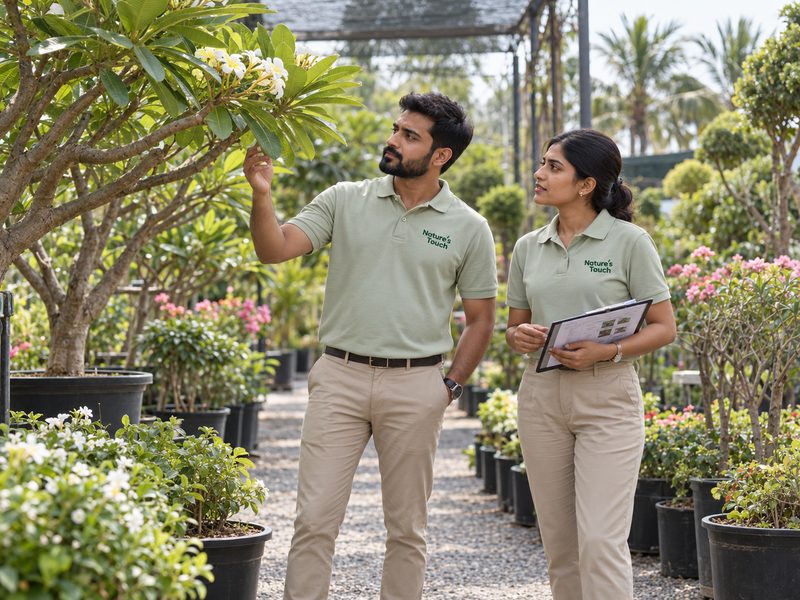
Leaf, root & herbScheduled horticulture — pruning, feeding, pest watch, replanting — by the same team that built the scheme, so standards never slip.
View service →
Kept at opening-day standardTimber and steel pergolas dressed in climbers — shade, scent and a sense of arrival, grown in until the structure disappears.
View service →
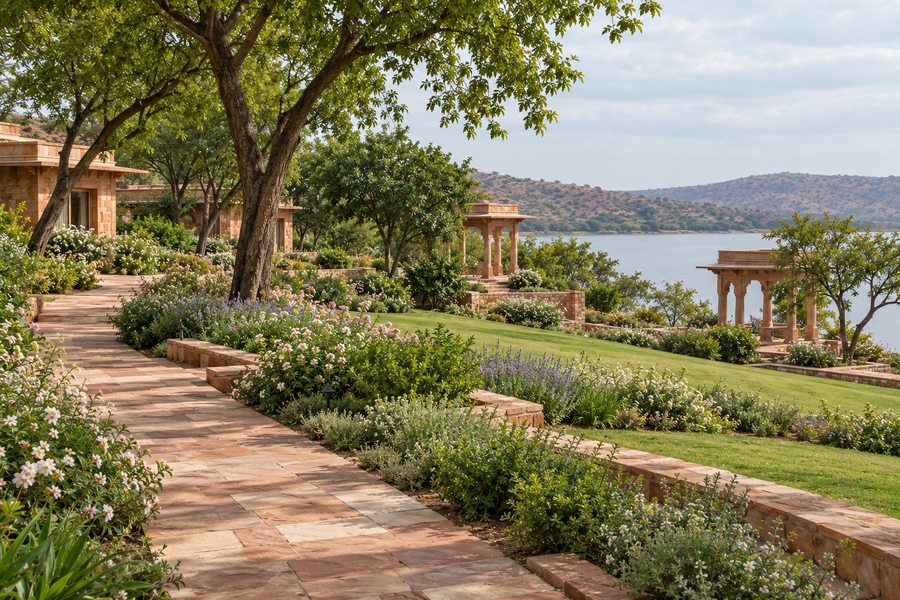
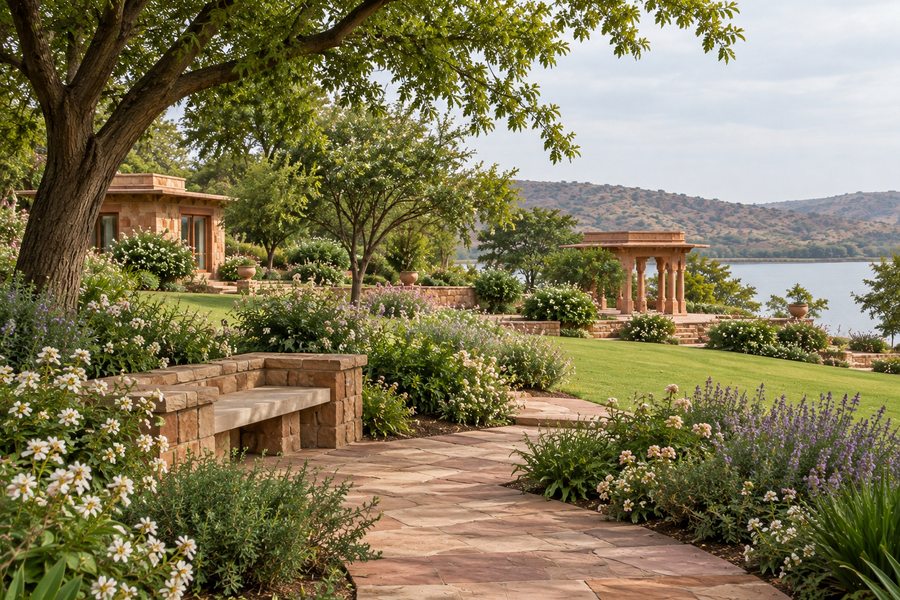
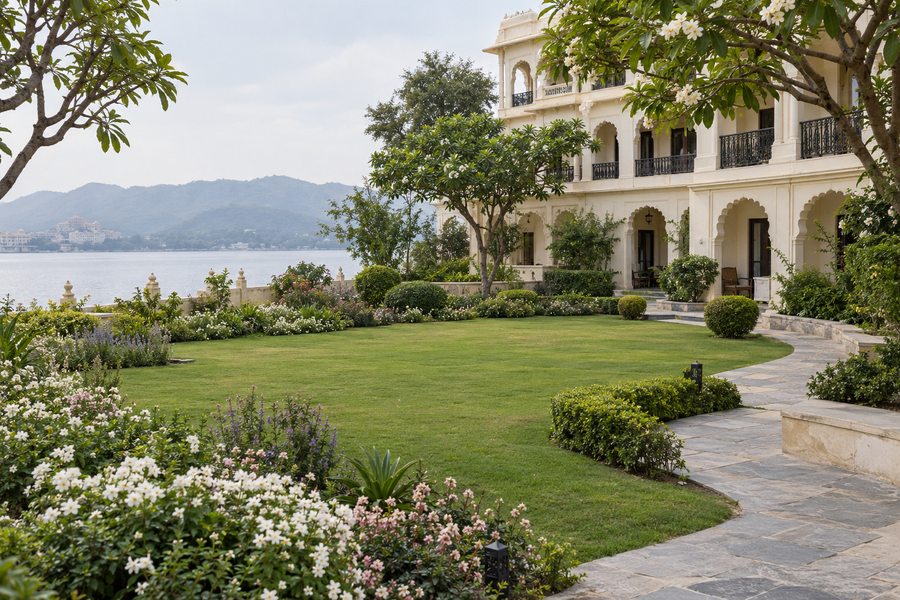
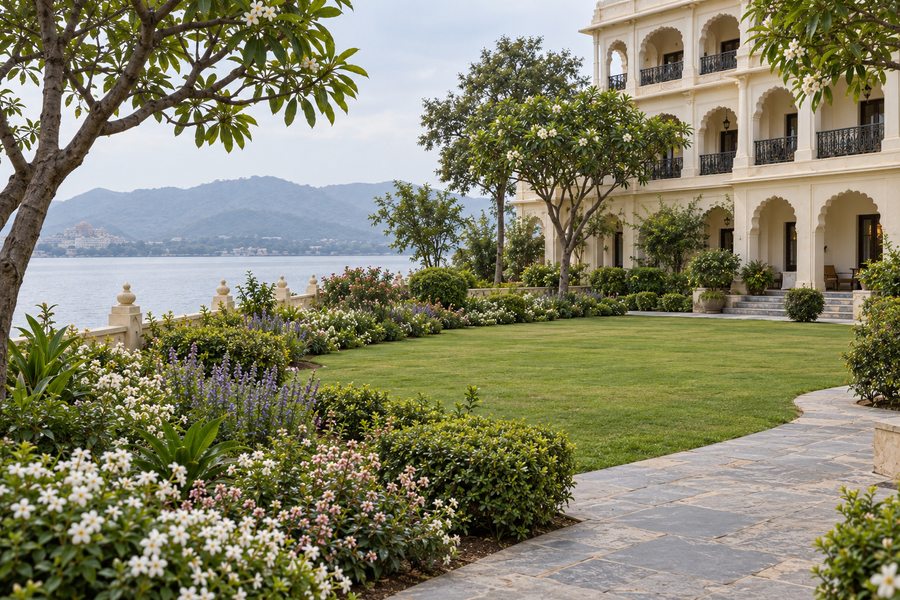
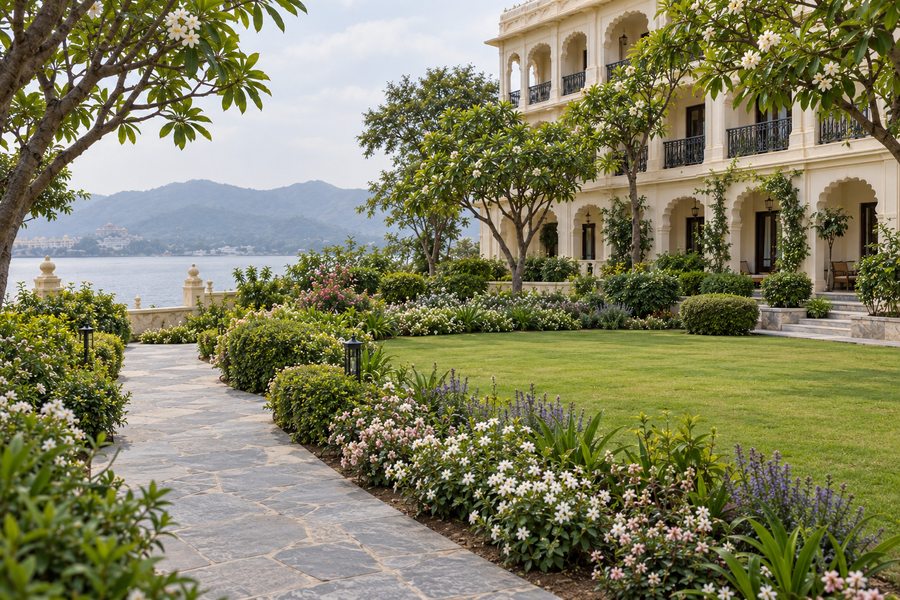
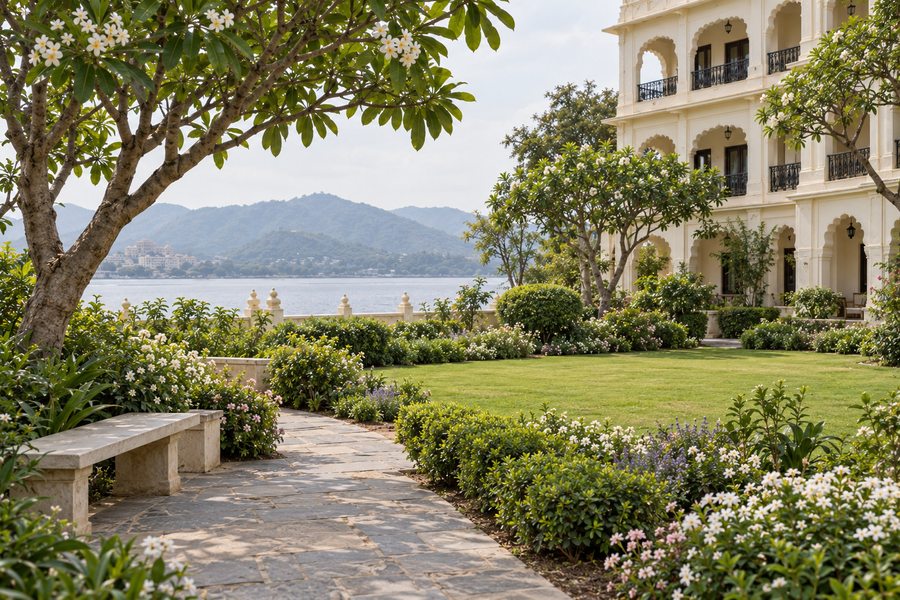
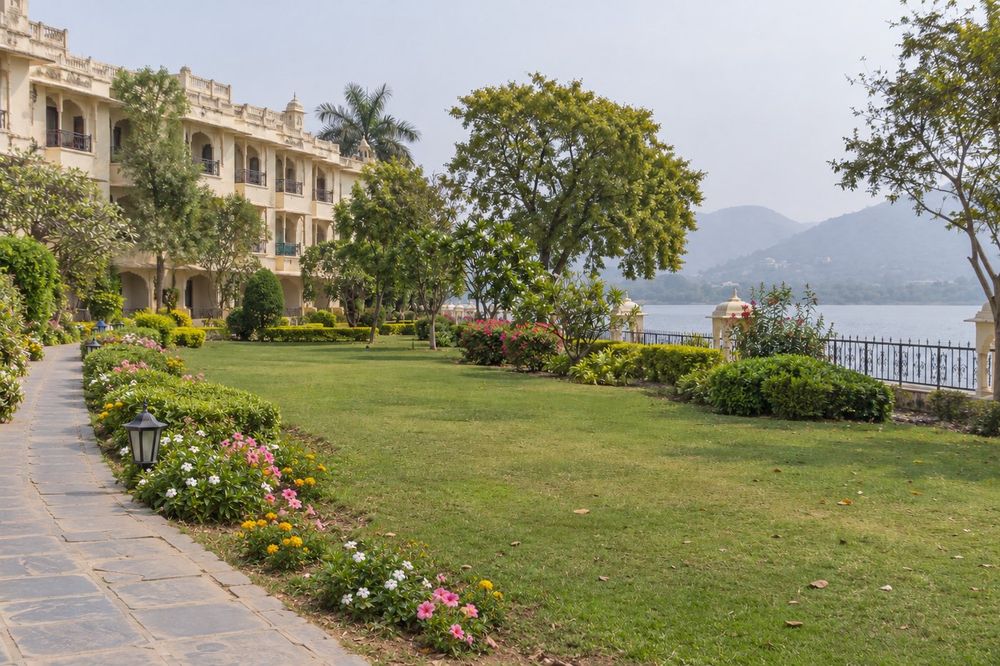
Structure, softened by flowerGardens we have made across India's hotels, estates and lakeside terraces — photographed on site, in working season.


◇ Photographs of completed Nature's Touch projects. Sections 06–07 show design intent.


Nature's Touch© was built on a single conviction: that a garden is not decoration.
It is stewardship. Every soil turned, every root established, every season carried is a choice that shapes how a garden lives.
Tell us about the site and the season you're working towards. We'll arrange a survey and return a drawn master plan — the way every garden here begins.