
Our principles
Soil care over soil chemistry, every drop of water accounted for, and planting that brings a garden alive.
We grow gardens the way the ground wants to grow.
Four rules we work by on every site. We build up the soil instead of replacing it. We feed it with compost, not chemicals. We use as little water as the climate allows and lose as little of it as possible. And we choose plants that bring birds and butterflies back, so the garden is alive on the day it opens and richer every year after.
The living soil
A handful of healthy soil holds billions of living things. They feed the plants, hold the soil in crumbs that keep water, and keep disease down. Look after them and the garden largely looks after itself.
Read the ground first
Before choosing a single plant we dig a pit and read the soil in layers. How thick each one runs tells us how deep roots can go, where water sits, and which trees will do well.
Udaipur’s ground runs shallow and stony, with bedrock close beneath. We plant to the profile we find, not the one we wish for.
Nutrient cycling
Tiny soil life turns dead leaves and roots into food that plants can actually take up.
Structure building
It glues soil into crumbs; the gaps hold the air and water roots need.
Disease suppression
Healthy soil life leaves little room for the pests and diseases that attack weak plants.
Soil care, not soil chemistry

No-till ground
We turn the soil as little as possible, so the fungal network and crumb structure stay intact.
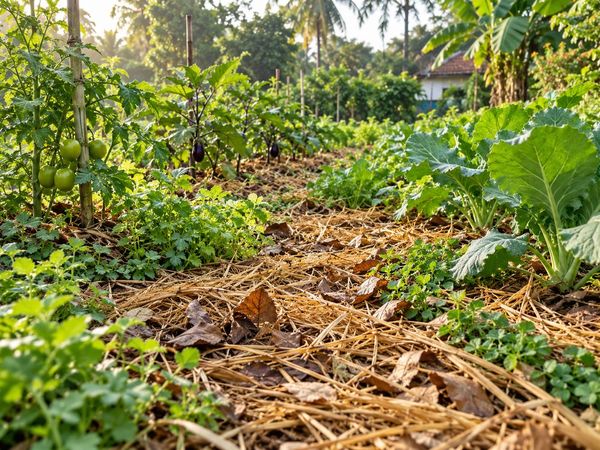
Cover & mulch
Bare earth stays covered — groundcover or mulch — feeding the soil and holding moisture through the heat.
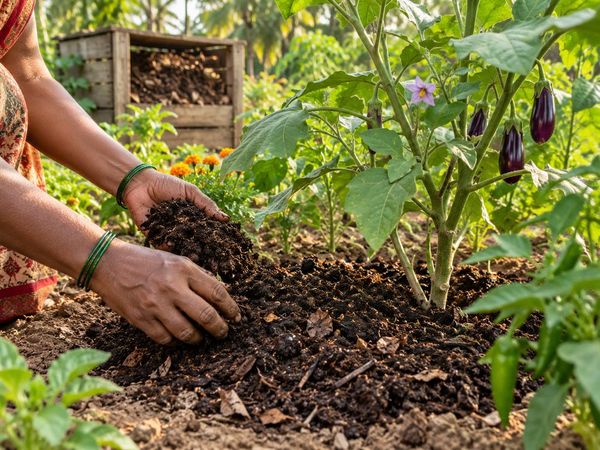
Compost, not salts
Organic compost rather than heavy synthetic fertiliser, so the microbial life stays diverse and fed.

No routine pesticide
Beneficial insects and microbes do the pest control. Chemistry last, never as routine.
Every drop, in a desert climate

Hydrozoning
Plants grouped by thirst: drought-happy planting across the wider grounds, thirstier beds kept small and close to the building.
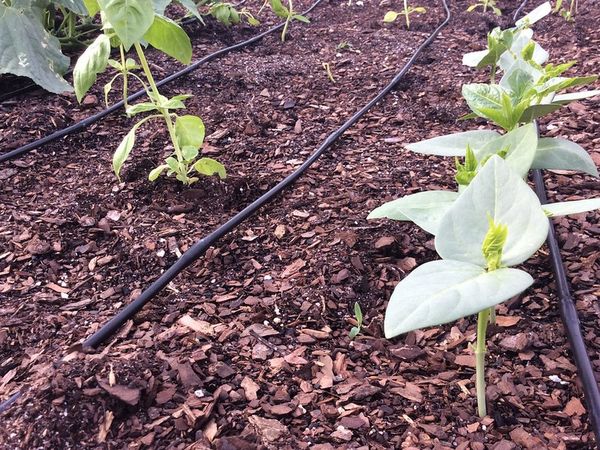
Drip, to the root
Drip pipes water the roots underground, so almost nothing is lost to the Udaipur sun.
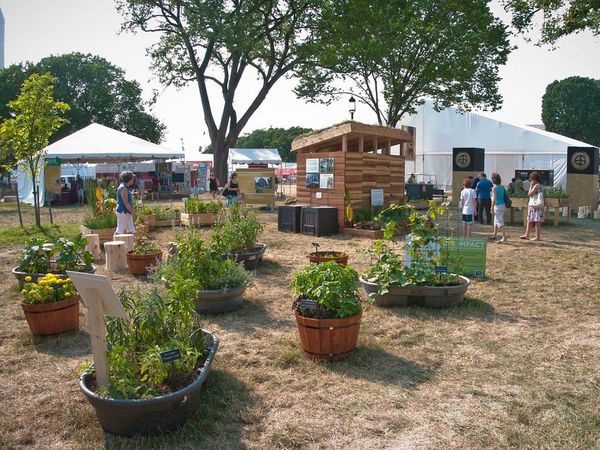
Rainwater capture
Roof and paving run-off returns to the garden instead of the drain.
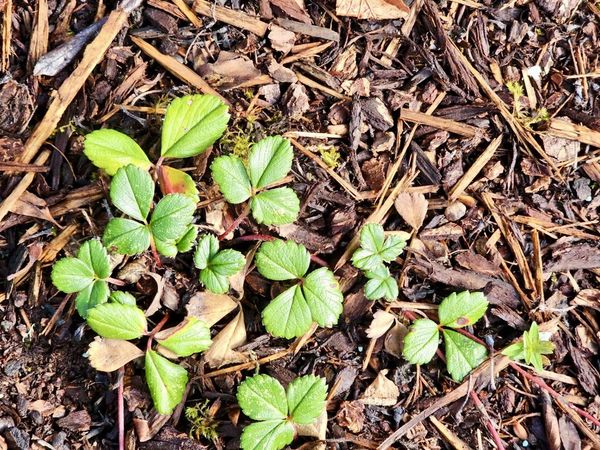
Mulch & morning
Mulch traps soil moisture; irrigation runs at first light.
Built to sit lightly on the land

Native & adapted species
Plants that belong here thrive on natural rainfall and ask little once established.

Permeable ground
Open-grid paving, gravel and stone let rain soak back into the earth.
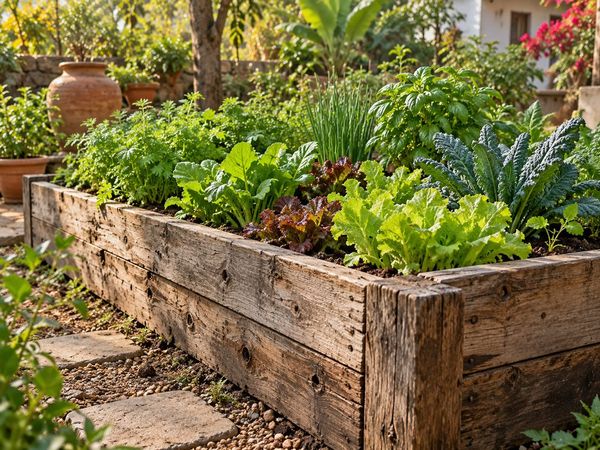
Reclaimed timber
Raised beds and borders built from salvaged wood where the brief allows.
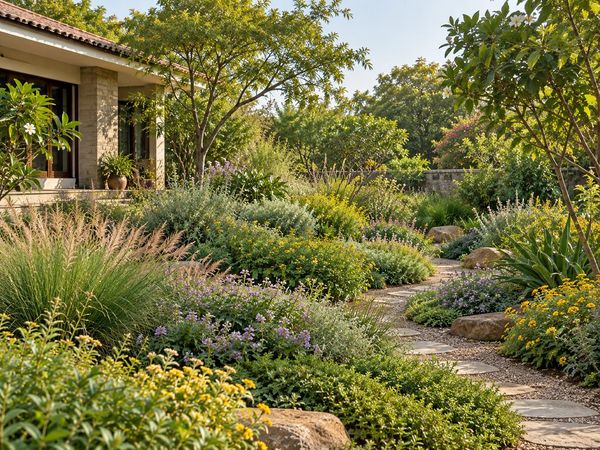
Less lawn
High-thirst turf swapped for groundcover, meadow and planting suited to the microclimate.
A garden that comes alive
Open landing pads for butterflies, long-lasting seed heads for foraging birds. A sample of the palette:
Legend High Medium Low · Palette adapts to each site's aspect, soil and water.
- 01How we work
How a garden moves from the first sketch to a master plan, and how it grows in the years after planting.
- 02Soil science
A cut through a planted lawn, two metres deep: the soil layers, what lives in them, and why we read the ground before we plant.
- 03Projects
Photographs from three of our own schemes — Raj Niwas, Narsingh Bagh and Inder Prakash.