
Quick answer: The landscaping ideas that work best in Indian gardens combine shade, layered planting and hard surfaces that stay cool: a shade tree or pergola where people sit, planting in layers from trees to groundcover, paths in local stone, plants grouped by water need, and lighting for evening use. Start with how the space will be used, then choose plants suited to your climate.
Most landscaping ideas online come from cooler, wetter places: wide lawns, hydrangeas, gravel that never gets hot. In India, the ideas that last are the ones designed around heat, a long dry season and a short, heavy monsoon. These are the landscaping ideas we use most often for homes, farmhouses, hotels and estates, from small front gardens to large grounds.
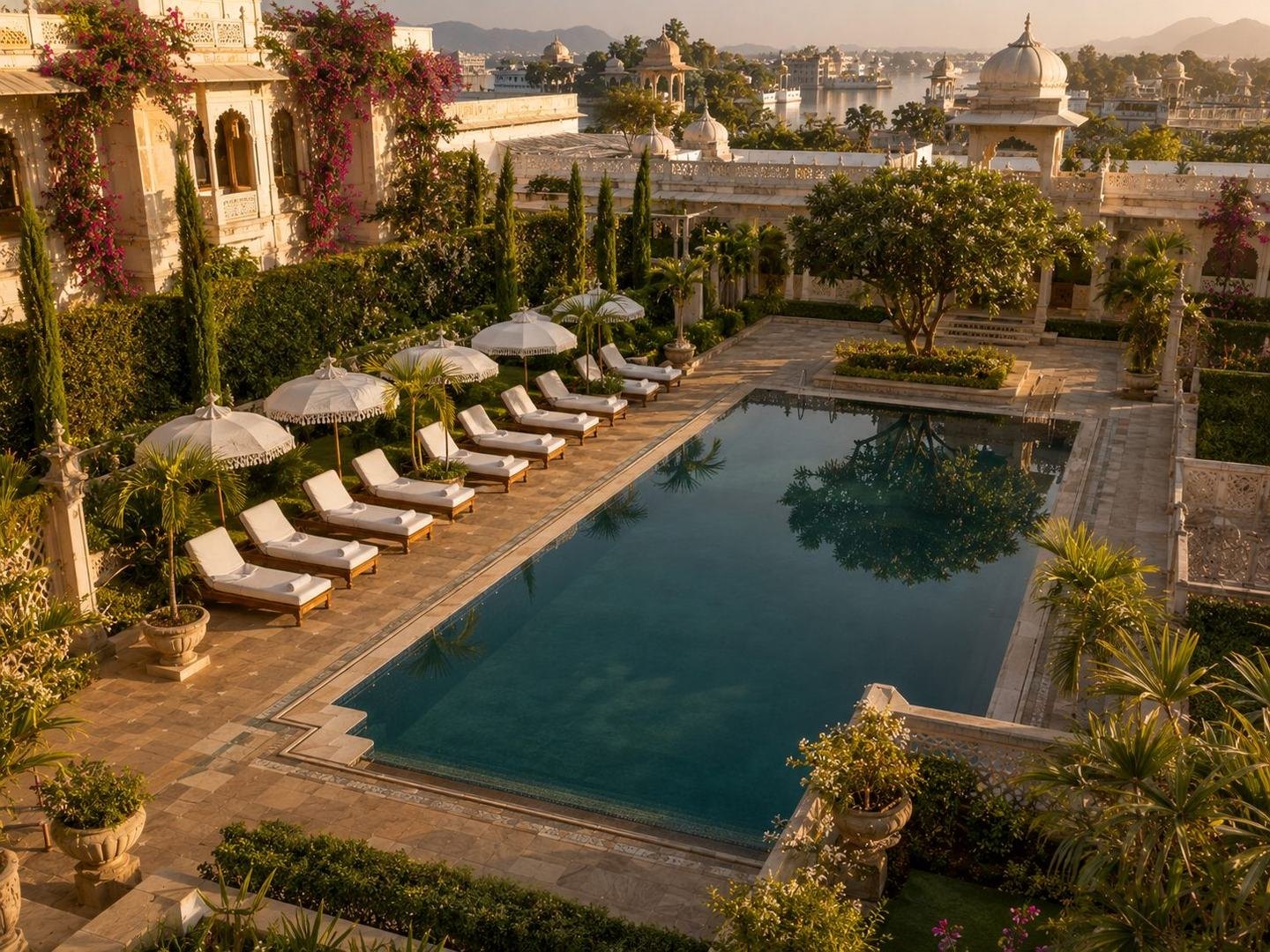
Where should landscaping start?
Start with how the garden will be used and where the sun falls, not with plants. Walk the space at morning, noon and evening. Mark where people will sit, walk, park, play or entertain, then plan shade and paths around those uses. Planting fills in around a layout that already works.
- List the uses: seating, dining, children's play, parking, vegetable beds, views to keep or hide.
- Map the sun and wind through the day and across seasons.
- Fix the bones: paths, edges, levels, drainage and shade structures.
- Plan irrigation before planting and paving.
- Choose plants for each spot's light, soil and water.
Front garden landscaping ideas
- A clear, generous path to the door in stone or brick, with low planting either side.
- One specimen tree, such as plumeria, a small neem or a flowering cassia, to frame the entrance and shade the facade.
- Clipped hedging of karonda, murraya or duranta to give structure that looks tidy all year.
- Planted borders instead of lawn for a front garden that stays green with far less water.
- Pots at the entrance for seasonal colour that can change for festivals.
Backyard landscaping ideas
- An outdoor room under a pergola or shade tree, with paving and seating.
- A small lawn only where it is used, edged cleanly so it reads as intentional.
- A kitchen garden in raised beds near the house, where it will actually be tended. See our kitchen garden page.
- Screening planting along boundaries for privacy: bamboo in contained beds, tall hedges or climbers on a fence.
- A fruit corner with lemon, guava, pomegranate or mango where space allows.
Small garden landscaping ideas
In a small garden, every element should do two jobs. Keep the centre open, plant the edges and use vertical space.
- Built-in seating with planters along a wall.
- Climbers on walls to add green without using floor space.
- One focal point, not several: a tree, a water bowl or a sculpture.
- Light-coloured paving to make the space feel larger and stay cooler.
For roofs and balconies, see our terrace garden ideas and small terrace garden ideas.
Low-water landscaping ideas
Water is the limiting factor in most Indian gardens for much of the year. Low-water landscaping keeps the garden green with far less of it.
| Idea | What it does |
|---|---|
| Hydrozoning | Groups plants by water need so each zone gets exactly what it needs |
| Drip irrigation | Puts water at the roots with little lost to evaporation |
| Mulch on every bed | Keeps soil cool and moist, and suppresses weeds |
| Less lawn, more groundcover | Removes the thirstiest part of most gardens |
| Native and climate-adapted plants | Need less water once established |
| Rainwater harvesting | Captures monsoon run-off for use later or to recharge groundwater |
Our drip irrigation page explains how irrigation is zoned.
Paths, edges and hardscape ideas
- Local stone such as Kota, sandstone or granite for paths; it suits the climate and the architecture.
- Permeable paving or gravel with stepping stones so rain soaks in rather than running off.
- Clean edges between lawn, bed and path; they make even a simple garden look designed.
- Steps and levels on sloping sites, with planting on the slopes to hold the soil.
- Pergolas for shade along paths and over seating. See our pergola design ideas.
Lighting and water features
- Low, warm path lights and uplights under trees make the garden usable after dark, when it is coolest.
- A water bowl or small fountain adds sound and attracts birds without the upkeep of a large pond.
- Reflecting pools and channels suit larger and heritage settings, inspired by the charbagh tradition.
Planting ideas by role
| Role | Plants that work in much of India |
|---|---|
| Shade trees | Neem, karanj, cassia fistula (amaltas), plumeria for small spaces |
| Hedges and structure | Karonda, murraya, duranta, ficus in large spaces away from buildings |
| Flowering shrubs | Bougainvillea, hibiscus, Tecoma stans, ixora, oleander |
| Groundcover | Wedelia, portulaca, lantana (trimmed), dwarf grasses |
| Climbers | Bougainvillea, jasmine, Rangoon creeper, curtain creeper |
Landscaping mistakes to avoid
- Planting before fixing drainage and irrigation.
- Too much lawn in a dry climate.
- Large trees too close to buildings, walls and pipes.
- Choosing plants from photographs taken in a different climate.
- No maintenance plan. A garden needs regular care to keep its shape; see our garden maintenance checklist.
Planning a garden or landscape? We design, build and maintain landscapes for homes, farmhouses, hotels and estates in Udaipur and across India. See our landscape design and soft landscaping service.
Tell us about the siteAsked often.
What are good landscaping ideas for Indian homes?
Plan shade first, layer planting from trees to groundcover, keep lawn only where it is used, use local stone for paths, group plants by water need with drip irrigation, and add warm lighting for evening use.
How do I landscape a small garden?
Keep the centre open, plant along the edges, use climbers on walls, build seating with planters, choose one focal point and use light-coloured paving.
What is low-water landscaping?
Landscaping that uses hydrozoning, drip irrigation, mulch, less lawn and climate-adapted plants so the garden stays green with far less water.
Which plants are best for landscaping in India?
Neem, karanj and amaltas for shade; karonda, murraya and duranta for hedges; bougainvillea, hibiscus and Tecoma for flowers; wedelia and portulaca as groundcover; jasmine and Rangoon creeper as climbers.
Where should I start when landscaping a garden?
Start with how the space will be used and where the sun falls, then fix paths, levels, drainage and shade, plan irrigation, and choose plants last.
Tell us about the site.
Every scheme begins with a survey. Send us the essentials and we will arrange one, then return a drawn plan — not a quotation against an assumption.
OR REACH US DIRECTLY